
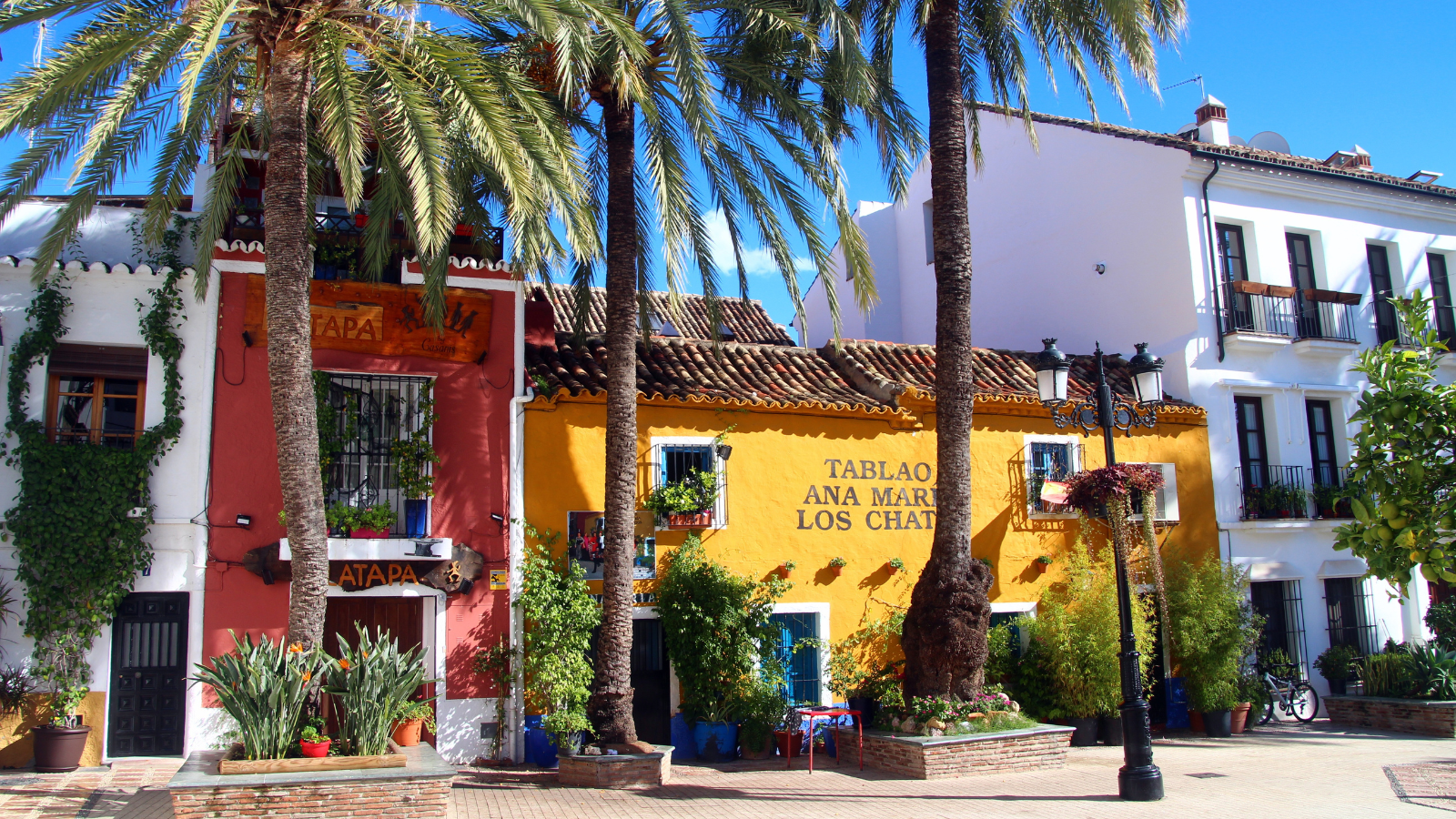
Marbella today is known worldwide for its beaches, golf courses and luxury villas but it started life as a modest fortified town on the Andalusian coast. Understanding how Marbella evolved from its old town origins to the Golden Mile, Puerto Banús and the wider residential areas helps explain why it is now one of Europe’s most desirable places to live, invest and spend time year round.
This guide walks through Marbella’s story step by step, from its historic heart and early agriculture to jet set glamour and modern residential neighbourhoods that attract buyers from all over the globe.
Marbella’s origins: a fortified coastal town with Andalusian roots
Long before Marbella became a household name, it was a small settlement built around defence and agriculture. Its historic centre, known today as the Casco Antiguo or Old Town, grew as a compact network of streets around a central square, designed for community life and protection rather than tourism.
The Old Town’s layout still reflects this past. Narrow streets and small plazas radiate from Plaza de los Naranjos, where whitewashed houses, traditional balconies and historic buildings frame everyday life. Over centuries, influences from Roman, Moorish and later Christian periods layered to create the architectural mix visitors see today: stone arches, small courtyards, churches and traditional Andalusian façades.
For anyone walking through Marbella’s Old Town today, this history is evident. The streets are intimate and the atmosphere feels distinctly different from the wide avenues and seafront promenades that came later. This historic core anchors Marbella’s identity and continues to give the town character beyond the modern resorts.
From working town to early seaside escape
Up to the mid twentieth century, Marbella was best described as a working coastal town. Local life was built around agriculture, fishing and small scale trade rather than tourism and international property buyers. The surrounding countryside was dotted with farms and estates, and the coastline was far less developed than it is today.
At the same time, the wider Costa del Sol began to be recognised for its mild climate and extensive sunshine. Early visitors, often from within Spain or nearby European countries, discovered that this part of Andalusia offered an appealing combination: traditional town life, sea views and reliable weather.
Marbella’s position, close enough to Málaga yet with its own historic centre and natural surroundings, made it a natural candidate for more structured tourism. Roads and infrastructure gradually improved, and the town’s coastal setting started to attract those looking beyond Spain’s larger cities and inland destinations.
This period set the stage for a more dramatic shift: the arrival of high end hospitality and international visitors who were looking for something unique on the Mediterranean.
The birth of modern Marbella: Marbella Club, jet set and the Golden Mile
The turning point in Marbella’s story came with the development of Marbella Club Hotel in the 1950s and 1960s. What began as a private retreat grew into a luxury hotel that drew aristocrats, artists, entrepreneurs and public figures from across Europe and beyond.
This new wave of visitors introduced Marbella to the international jet set. The town was no longer just a local coastal community; it became a discreet, high quality destination where guests could enjoy privacy, sea views and a relaxed lifestyle under the sun.
As demand grew, so did the coastline. The stretch between Marbella’s town centre and the emerging resort areas started to fill with villas, hotels and later apartment complexes. Over time this area became known as the Golden Mile, a prime residential and hotel zone connecting the town to what would later be Puerto Banús.
Several features distinguish the Golden Mile today:
- Beachfront properties with direct access to promenades and the sea.
- Established villas and gated communities set back from the shore, surrounded by mature gardens.
- A mix of luxury hotels, restaurants and beach clubs that extend Marbella’s hospitality tradition.
For EU and UK visitors, the Golden Mile quickly became synonymous with high end Mediterranean living. It is easily accessible from major European cities yet retains a sense of privacy and exclusivity. The combination of climate, architecture and lifestyle created a new image of Marbella as a European lifestyle capital, not just a holiday spot.
Puerto Banús and Nueva Andalucía: westward expansion and marina lifestyle
While the Golden Mile extended Marbella’s coastline, a new chapter began to the west with the vision for Puerto Banús and the surrounding residential areas. In the 1960s, large tracts of land west of Marbella were still relatively undeveloped, offering an open canvas for ambitious projects.
The idea was bold: to create a marina and surrounding communities at a scale that would redefine this part of the coast. The plan involved not just a harbour but a series of neighbourhoods, golf courses and residential developments that would integrate leisure, living and services in a single destination.
The marina itself was designed to attract yachts and pleasure boats from across the Mediterranean, with a waterfront lined by shops, restaurants and apartments. Surrounding it, the land behind the port evolved into Nueva Andalucía, a broad residential district that is now well known for its golf courses and villa communities.
Today:
- Puerto Banús is recognised globally for its marina, luxury boutiques, restaurants and nightlife.
- Nueva Andalucía is often referred to as the Golf Valley, thanks to its concentration of golf clubs and residential streets overlooking fairways and greens.
- The roads and infrastructure link these areas directly back to Marbella’s town centre and Golden Mile, creating a continuous western corridor of residential and leisure hubs.
For modern buyers, these neighbourhoods offer distinct choices. Puerto Banús delivers a marina centred lifestyle with easy access to nightlife and beachfront amenities, while Nueva Andalucía offers quieter residential streets, golf views and a sense of community that appeals to families and long term residents.
East Marbella and the move to year round living
As development advanced westwards, Marbella’s growth also extended to the east. Areas such as Los Monteros, El Rosario, Elviria and other east side neighbourhoods began to see villas, apartment complexes and resort projects that took advantage of wider beaches and pine lined coastal stretches.
Compared with the Golden Mile and Puerto Banús, east Marbella neighbourhoods often feel more residential and relaxed. They combine seafront properties with family oriented developments and are supported by international schools, local shopping centres and a growing network of services.
Over time, increasing numbers of residents from the EU and UK began to choose Marbella not just as a holiday address but as a primary or long term home. Several factors drove this shift:
- Year round flight connections from many European cities to nearby Málaga Airport.
- A climate that allows outdoor living across all seasons.
- Established expatriate communities, particularly from Northern Europe and the UK.
- A wide choice of neighbourhoods, from historic Old Town streets to beachfront apartments and golf side villas.
This move from seasonal tourism to year round residency changed the way Marbella developed. New projects were designed with permanent living in mind: better insulation, community facilities, schools and services. Villas and apartments were built to suit families, remote professionals and retirees as much as short stay visitors.
Why Marbella’s history matters if you are moving here
For buyers and long term visitors from the EU and UK, Marbella is often compared with other Mediterranean hotspots such as the French Riviera, Italian coastal towns or neighbouring parts of the Costa del Sol. The town’s history explains why it stands out.
Several aspects are particularly relevant:
- Historic core and identity: Marbella’s Old Town preserves a sense of place that many purely modern resorts lack. For residents, the ability to walk through a genuine historic centre with traditional architecture, small shops and local restaurants adds depth to everyday life.
-
- Structured coastal development: The creation of the Marbella Club and the Golden Mile did not erase the town’s historic heart; instead, it extended its reach along the coast. This layering of old town, beachfront and residential areas offers varied lifestyles within a relatively compact area.
-
- Purpose built marina and golf valley: The decision to build Puerto Banús and the surrounding golf oriented residential areas gave Marbella a marina and golf identity that remains attractive to international buyers. Many future residents specifically look for destinations that combine boating, golf and local culture, which Marbella now provides.
-
- East side neighbourhoods for families and long stays: The growth of east Marbella completed the picture, offering quieter residential environments with easy access to schools, services and the beach. This is particularly relevant for those planning a full relocation or long stays with children.
Understanding this history helps buyers match neighbourhoods to their preferences. Someone drawn to traditional streets and local cafés might favour Marbella centre and the Old Town, while those looking for marina nightlife may gravitate to Puerto Banús and families might prefer the residential feel of Nueva Andalucía or east side areas.
Marbella today: a European destination shaped by decades of development
The result of this gradual evolution is a town that feels both historic and modern, local and international. Marbella today is:
- A coastal town with a preserved historic centre that gives it cultural and architectural depth.
- A luxury destination with established prime areas along the Golden Mile and seafront.
- A marina hub through Puerto Banús, connected to a wide network of golf courses and residential communities.
- A year round residential choice for buyers and residents from across the EU, the UK and beyond.
For people exploring Marbella from abroad, whether for relocation, investment or extended stays, this history explains why the town’s neighbourhoods look and feel the way they do. It clarifies how a once modest fortified town became one of Europe’s most recognised lifestyle destinations and why its different districts each offer a slightly different version of Mediterranean living.
Key Marbella neighbourhoods at a glance
To tie the history into present day choices, here is a brief overview of the main areas many international buyers consider:
- Marbella Old Town (Casco Antiguo): Historic streets, traditional architecture and a strong sense of local identity. Ideal for those who value character, walkability and proximity to local restaurants and shops.
-
- Marbella centre and beachfront: A mix of residential buildings, promenades and beaches stretching east and west from the town. Offers everyday convenience and straightforward access to services.
-
- Golden Mile: Prime coastal strip between Marbella centre and Puerto Banús. Home to luxury hotels, beachfront apartments and villa communities that evolved from the Marbella Club era.
-
- Puerto Banús: Marina with boutiques, restaurants and apartments surrounding the harbour. Known for yacht berths, nightlife and waterfront living.
-
- Nueva Andalucía (Golf Valley): Residential area behind Puerto Banús, defined by golf courses, villas and apartment complexes. Popular with those seeking quieter streets, golf views and community living.
- East Marbella: Neighbourhoods such as Los Monteros, El Rosario and Elviria, combining beachfront and hillside properties. Favoured by families and long term residents who want space, services and easy access to schools.
Each of these areas reflects a different chapter of Marbella’s development, from historic core to modern marina and residential expansion. Together, they form a diverse coastal town that continues to evolve while maintaining the foundations laid over decades.
Thinking about owning a home in Marbella?
If you are considering buying a property in Marbella, having local guidance makes a real difference. Choosing between the Old Town, Golden Mile, Puerto Banús, Nueva Andalucía or east side neighbourhoods is easier when you are guided by someone who knows each area well.
Property Finder Marbella specialises in helping buyers from all over the world find homes that match their lifestyle, budget and long term plans. Whether you are looking for a holiday apartment, a family villa or a property with strong rental potential, our team can guide you through the market and the buying process.